|
TATAMI MAT - PRODUCT INTRODUCTION
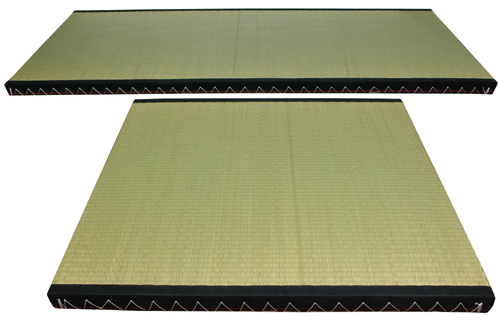
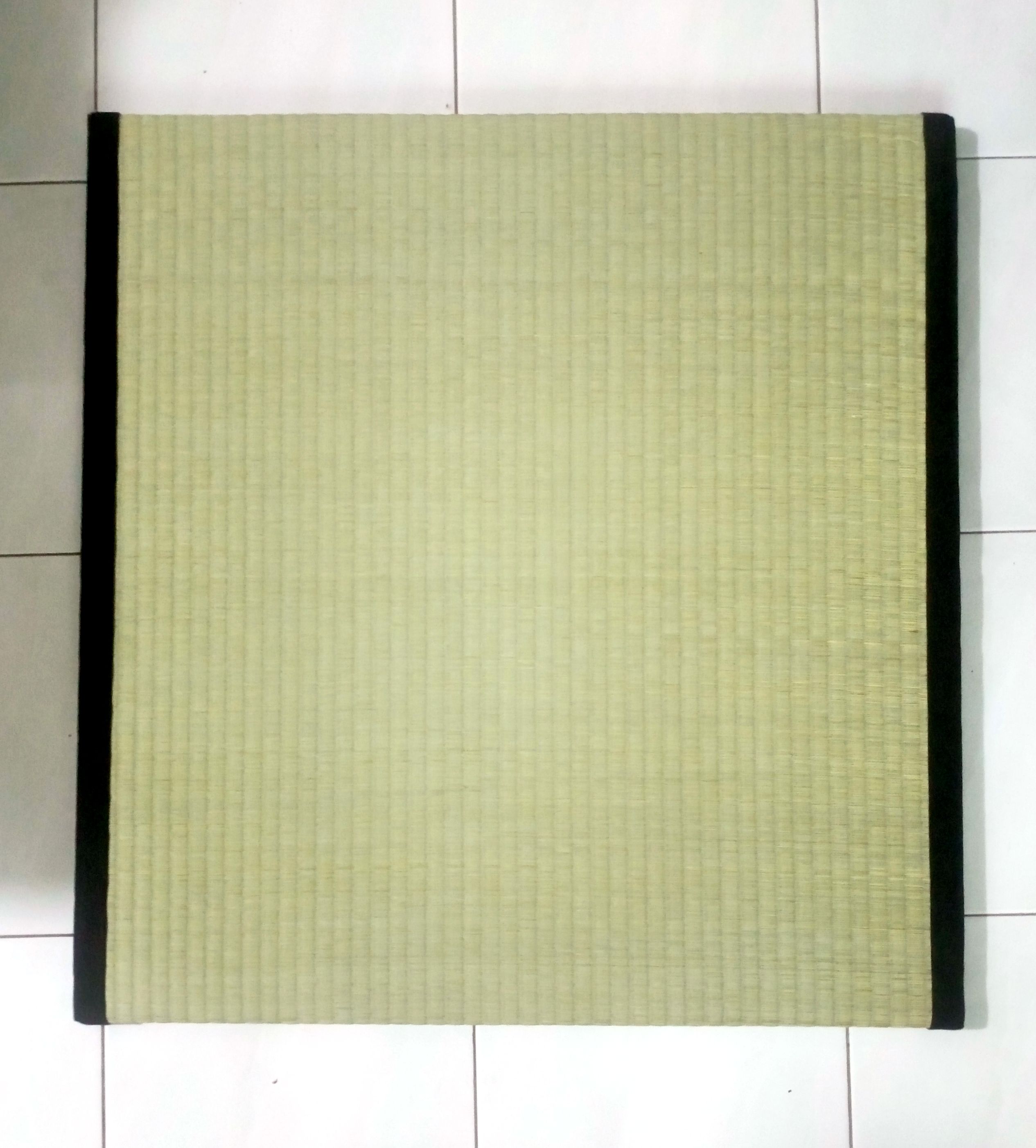
Tatami
mats
(畳)
are woven straw
mat used in traditional and modern Japanese
homes. Tatami are made in
individual mats of uniform size and shape, bordered by
plain black cloth (#13) or Gold & Black Plum Pattern
(#5).
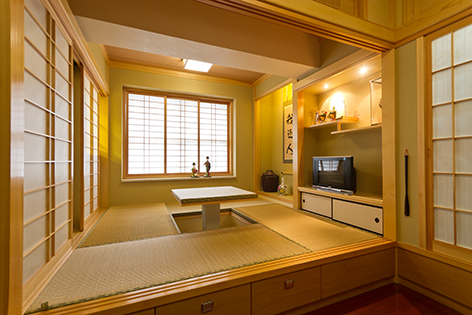
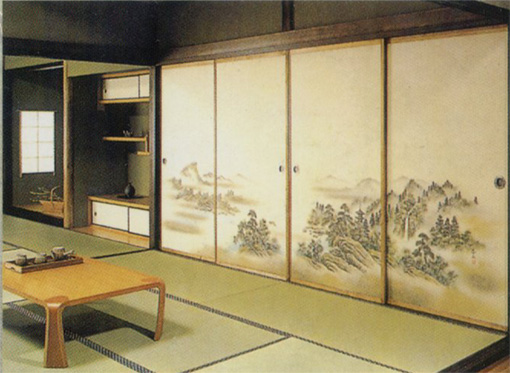
In the Japanese home, tatami mats are
used as a surface for sitting,
sleeping and walking.
Our Tatami
factory specializes in
manufacturing tatami series products, all the
equipments are shipped from Japan, and all the
professional technicians have been trained in
Japan.
The floor in a traditional Japanese room is
covered with tatami, mats made of hard-packed
straw covered with woven rushes. In
the Heian period (794-1191), tatami
mats were luxury goods used by
emperors, nobles, religious leaders and high-ranking
officials. In those days tatami were placed only
where people sat. From the Muromachi
period (1338-1549) they began to be
used to cover the whole floor.
There are three different parts to tatami: the
reed or rush cover, the straw core and the
decorative cloth edging. In Japanese
these are the tatami omote, tatami
goto and the tatami beri. The tatami omote is
made of a soft reed and each tatami needs about 4,000
to 5,000 rushes. Hemp or cotton string
is then used to weave the omote
together. To make the tatami goto or
straw core, 40cm of straw is crushed to just 5cm.
Finally, cloth is used to border the mats on the
long sides. The color of these tatami
beri was used to show the rank of the
individual household that owned the
tatami. If a pattern is woven into the tatami beri, much
care is taken to make the pattern continuous
where the tatami border each other.
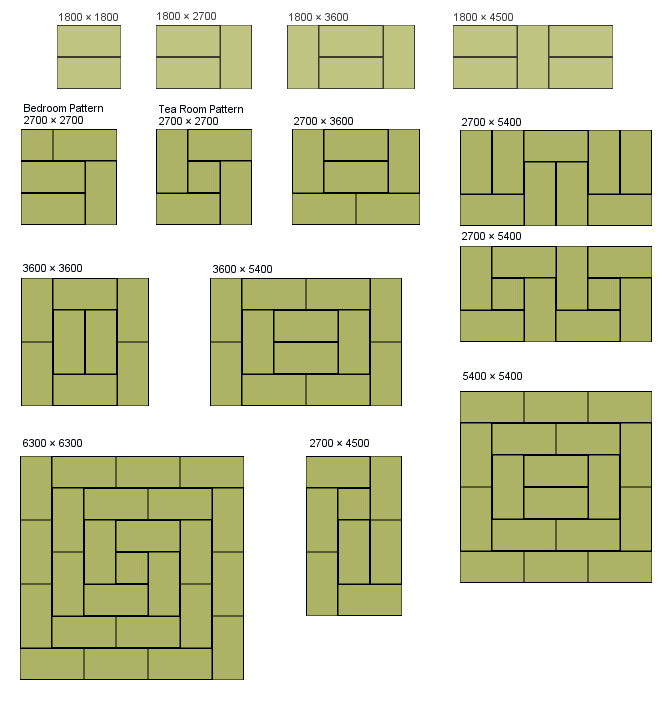
The size of a Japanese room is measured in
tatami, as a traditional tatami had a more or
less fixed size. A standard tatami
measures about 90cm by 180 cm. Tatami
can be fitted in different ways in a room, but
number and layout of tatami can bring good or bad
fortune. Tatami should not be laid in grid
patterns, for example, as this will
bring bad luck. The only time this
layout can be used is during mourning. Many Japanese
shops are designed to be the size of four and
half tatami, as this will ensure good
fortune, whatever the kind of business
it is.
Tatami are very effective at absorbing heat. And
they absorb a lot of water from the air. If
the atmosphere is dry, the water will
evaporate again. Tatami are made of
soft reed and according to traditional
Chinese medicine this will calm the spirit,
relax the body and soothe the mind. Whatever the health
benefits, a room with fresh tatami
smells wonderful and is very pleasant
in Japanese summer.
Our
tatami is made of native good-quality
straw and fine mat surface. All the products are
fumigated, steamed and processed according to our
special recipe
Our
elaborately produced tatami is also
helpful to eliminate fatigue and refresh vigor. Our
company will continue contributing to
Researching, developing and Providing
natural, Comfortable, healthful and
high quality products to everyone all over the
world!
Characteristics of Tatami room
decoration:
-
Provide
noble, comfortable and healthful living
environment with natural materials. Our tatami, a real
green product, is made of natural
straw and igusa, without any
chemical ingredient.
Product Trait
-
Make
your room appear much more spacious.
-
Prevent
spur growth, backbone crook, and
rheumatism.
-
Moderate
hardness, anti-distortion and good
durability.
-
The
ability to adjust the humidity indoor and
radiate fragrance.
The makeup of tatami
room:
-
Tatami
floor covering:
-
Tatami,
a green product, feeling warm in winter
and cool in summer, can adjust the humidity. Its
moderate hardness not only contributes to
the growth of staggering and
school-age children, but also is
conducive to the health of waist and backbone of the
middle age and old age
people |